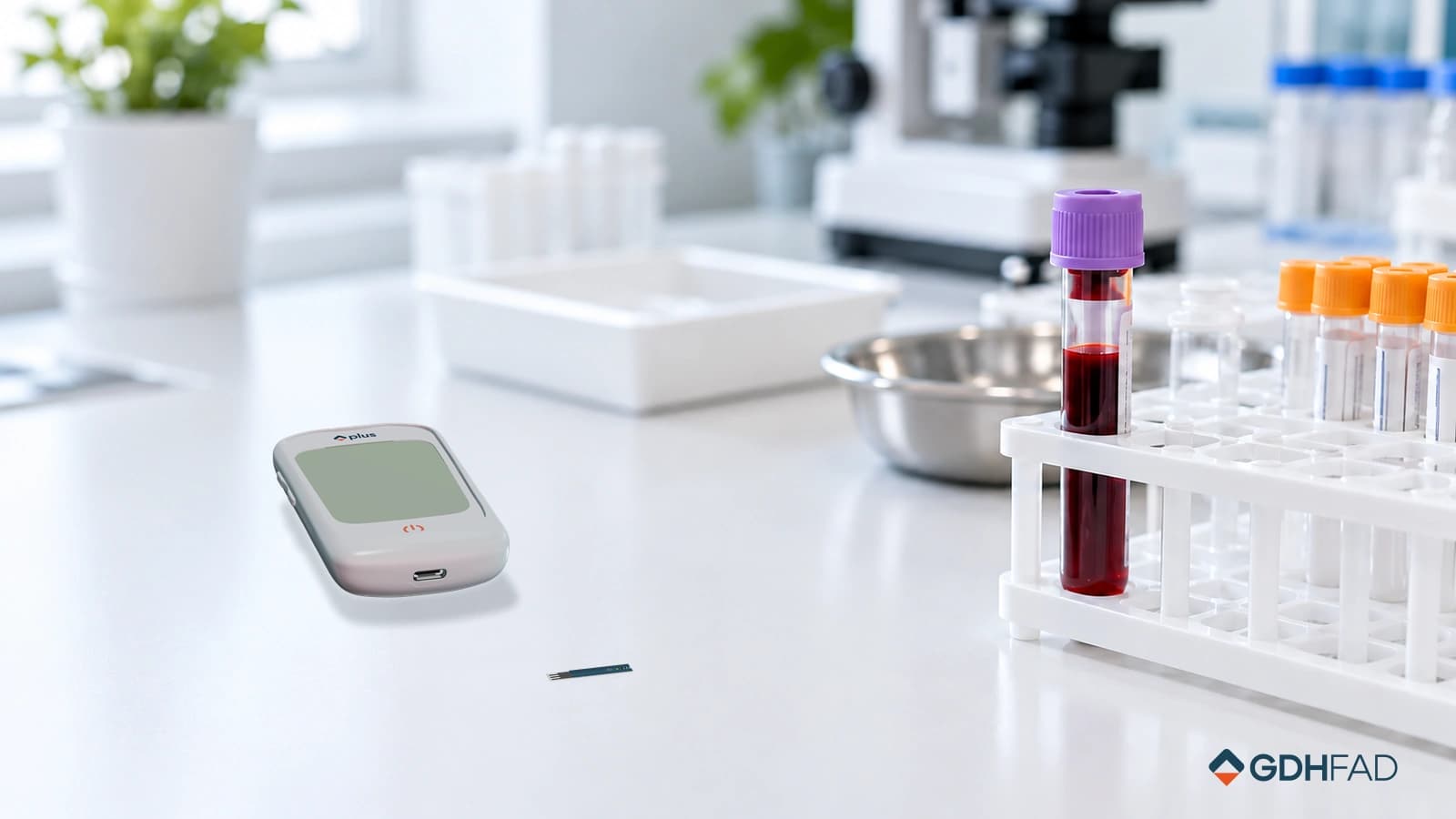
Compare like with like
Home meters usually test a drop of capillary blood, while laboratories may use another sample and method. Glucose also changes over time. A morning home test and a much later laboratory result are not a simultaneous accuracy check.
Each method has conditions
A meter has specified operating limits. Hands, strips and sample characteristics may affect a reading. Laboratory procedures have their own requirements. Correctly obtained results need not match every final digit.
Arrange a useful comparison
Bring your meter to an appointment and agree on the timing and method of comparison. Ask a professional to observe your technique and check supplies.
- Identify the laboratory test being compared.
- Check units.
- Record both testing times.
- Keep strip and procedure information.
Different purposes
Home monitoring does not replace medical diagnosis of diabetes. HbA1c reflects a longer period and is not equivalent to a single meter reading. Persistent differences need clinical assessment and device troubleshooting. Do not invent a correction factor from one comparison.
Sources
- FDA: Blood Glucose Monitoring DevicesUpdated:
- NIDDK: Diabetes Tests and DiagnosisReviewed by the source:
- CDC: A1C Test for Diabetes and PrediabetesPublished: