
1 Introduction
Congenital hyperinsulinism (HI) is a rare disorder of glucose homeostasis that usually presents in the neonatal period. It is a heterogenous condition, with the unifying feature of excessive and unregulated insulin secretion resulting in recurrent and severe hypoglycemia (1) and an associated, high risk of neurodevelopmental injury (2–4). The majority of severe cases have an underlying genetic cause, most often mutations in ABCC8 or KCNJ11, resulting in defects in the ATP sensitive K channel (5) and an uncoupling of glucose levels and insulin secretion.
Despite recent progress (6) medical and surgical therapies for HI remain limited (7) and prevention of hypoglycemic brain injury is dependent on regular monitoring of glucose levels and timely adaptation of treatment. In the inpatient setting, patients often have severe disease, necessitating high-frequency blood sampling and frequent alterations in infusions of dextrose-containing intravenous glucagon. Glucose monitoring is invariably performed by intermittent fingerprick glucose sampling but this risks missing hypoglycemia between tests and offers no information on glucose trends (8).
After almost 20 years of use in people living with diabetes, CGM is now being used in the HI population (8, 9) and offers an attractive alternative to intermittent fingerprick glucose monitoring. Despite suboptimal accuracy in the outpatient setting (9, 10) and some negative reports around alarms and sensor changes (11), most HI families report positive feelings around CGM (10–12) and there have been recent calls from HI charity groups to expand its use (13).
Although no large-scale trials have evaluated the efficacy of CGM in the outpatient setting, small studies indicate possible utility as a behavior change tool to reduce hypoglycemia (14, 15). Furthermore, use of inpatient CGM data has been used to provide high-granularity phenotyping data (16, 17) and report on clinical trial outcomes (6). CGM as an inpatient tool has multiple theoretical benefits such as minimizing missed hypoglycemia between tests; timely titration of intravenous therapies in response to glucose levels; reducing painful finger-prick glucose tests; possible diagnostic use (9); and as an adjunct to histopathology in the surgical setting (18). However, the use of CGM as a non-research, clinical tool has not been evaluated in the inpatient setting.
We aimed to investigate if the use of CGM in the inpatient setting identifies hypoglycemia that would have gone unnoticed on intermittent fingerprick testing. We also sought to measure the accuracy of CGM in the inpatient setting.
2 Methods
Since 2023, the use of CGM devices for all inpatients with HI has been standard practice within our center. Between September 2022 and November 2025, all patients admitted to a quaternary specialist HI center, were provided with a Dexcom G6 or G7 CGM device and data were collected for the duration of their inpatient stay. Patients, and their parents, consented to sharing their CGM and finger-prick data as per ethical approval HRA 07/H1010/88. All inpatients with HI, during this period, were included in the study and thus no patients were excluded.
Using Dexcom Clarity, CGM data were reviewed for hypoglycemic events for each patient. Hypoglycemic events were defined as per ADA CGM hypoglycemia criteria; at least three consecutive readings <3.5mmol/L required to “commence” an event and three consecutive readings ≥3.5mmol/L required to terminate the event. All events were thus ≥15 minutes duration. From a database obtained from the biochemistry department of the hospital, paired point of care test (POCT) glucometer finger-prick glucose values were sought for all hypoglycemic events to confirm or refute true hypoglycemia. False positives were those where a fingerprick performed during the hypoglycemic event was ≥3.5mmol/L.
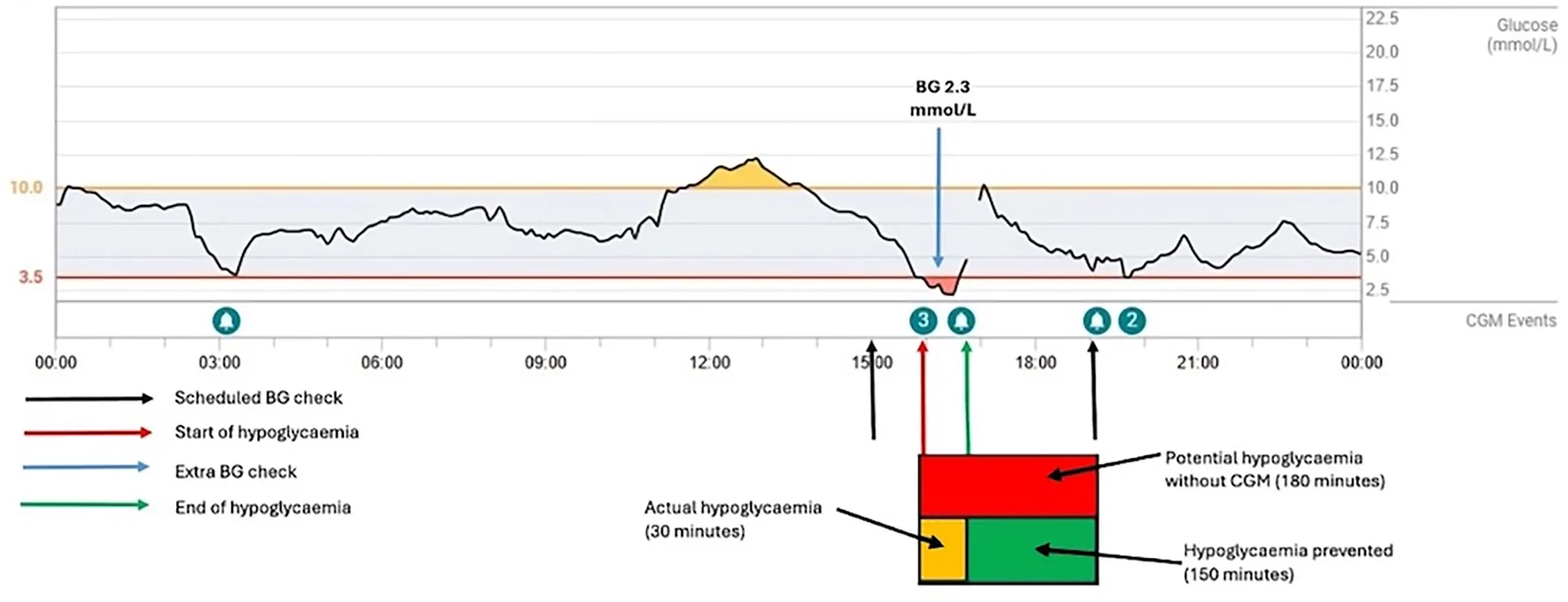
For true positives (fingerprick value <3.5mmol/L during an event), electronic healthcare records were accessed to determine when the next scheduled fingerprick would have taken place, had it not been for the CGM alert. An example CGM trace demonstrating the calculation method is shown in Figure 1. The time between the start of the hypoglycemic event and the time of the next scheduled fingerprick was used to determine the length of potential hypoglycemia (red on Figure 1). The time between the end of the hypoglycemic event and the next scheduled fingerprick was used to calculate the amount of hypoglycemia likely saved, due to CGM alarms (green on Figure 1). These were used to provide context for the relative amount of hypoglycemia saved as a proportion of total time hypoglycemic (green on Figure 1 as a proportion of red on Figure 1). Electronic health records were also reviewed to determine whether the hypoglycemic event had been treated and by what method. Baseline statistics of mean, median, standard deviation, and range were calculated for all hypoglycemia measures, in Microsoft Excel.
2.1 Accuracy and basic glycemic analysis methods
CGM data were downloaded from Dexcom Clarity in.csv file format. Basic glycemic data such as Time Below Range (TBR) was calculated for glucose thresholds of 3.9mmol/L, 3.5mmol/L and 3.0mmol/L using bespoke code in Python 3.10.
Fingerprick glucometer data were obtained for all patients for the dates of their inpatient admission via the biochemistry department of the hospital. Bespoke code in Python 3.10 was used to pair each fingerprick glucose value to the nearest CGM value for each patient, in a process described in detail elsewhere (19). Fingerprick values that did not have a paired CGM value within 5 minutes were discarded from the analysis. Basic statistics such as mean absolute relative difference (MARD), mean absolute difference (MAD), mean difference and hypoglycemia (<3.5mmol/L) sensitivity and specificity were calculated using Python 3.10. Hypoglycemia detection was defined as any CGM glucose value <3.5mmol/L within a 15-minute period before or after a fingerprick value <3.5mmol/L and this rate was calculated using Python 3.10.
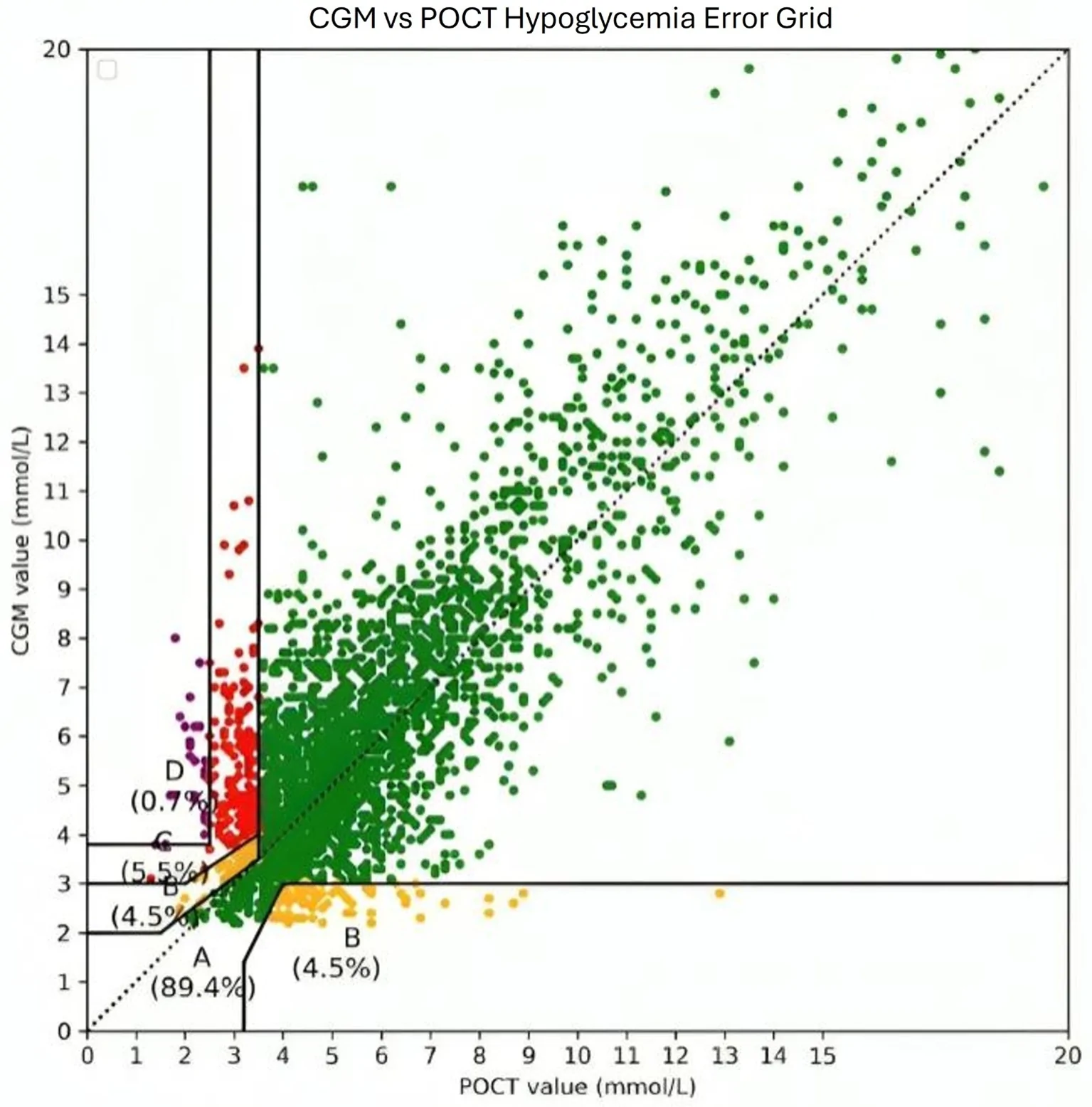
Paired values were subsequently plotted on to the hypoglycemia Error Grid (19) to provide clinical insight into CGM deviation within the specific context of HI.
3 Results
3.1 Main results
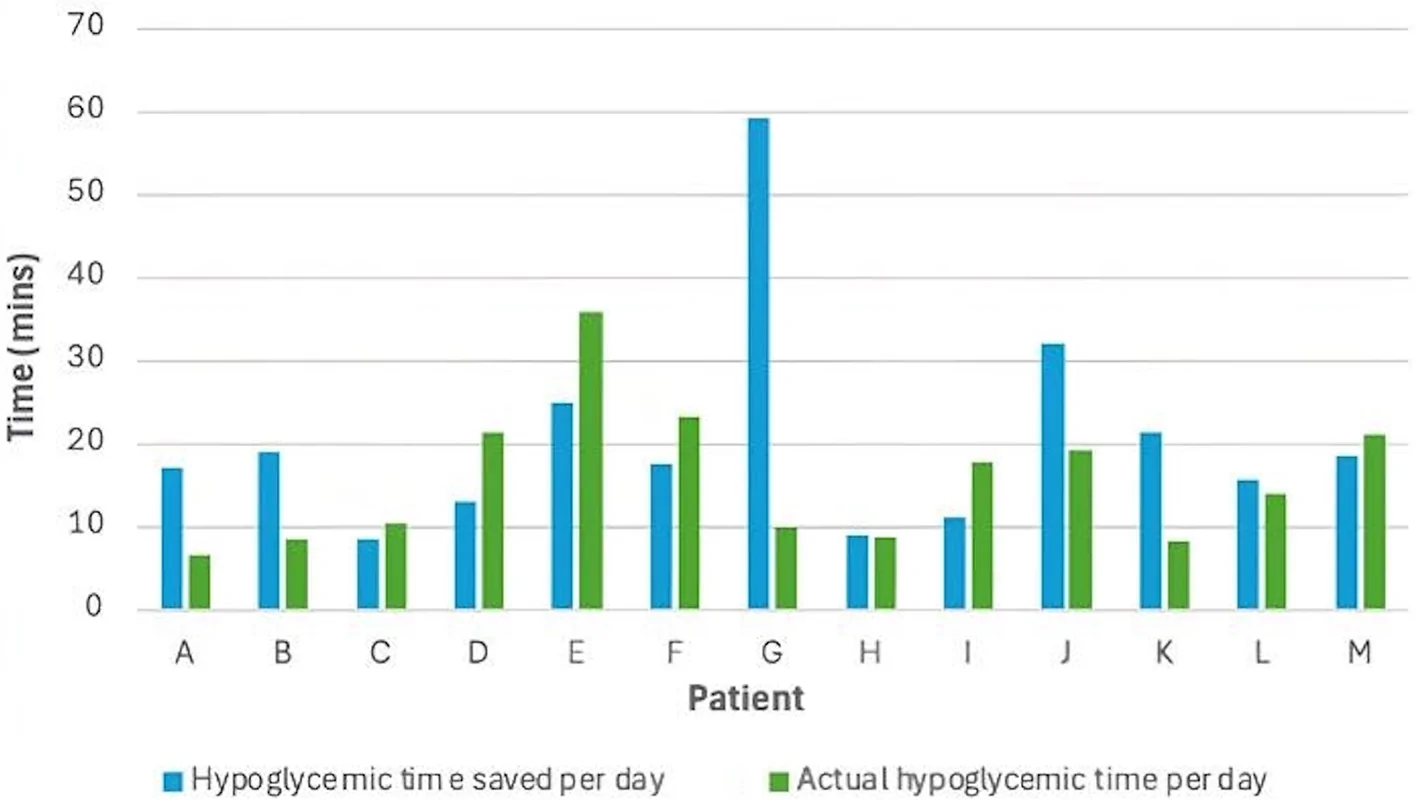
Data were available for 13 patients during the monitoring period. Demographics are provided in Table 1. This provided 627 days of CGM data; a mean of 48.2 days per patient. Duration of inpatient CGM use ranged from 3 to 136 days per patient. CGM identified 915 hypoglycemic events; 194 events had no associated point of care test (POCT) finger-prick data to confirm or refute hypoglycemia and were therefore discarded. The remainder (721) of events were checked by POCT glucometer, with 273 true hypoglycemic events and 448 false positives. The false discovery rate was thus 0.71 per day. Total measured, and fingerprick confirmed, hypoglycemia was 10312 minutes, with a mean (SD) of 16.44 (8.4) minutes per day. Using methods described above, a calculated total of 10481 minutes of potential hypoglycemia was saved using CGM, with a mean (SD) of 20.5 minutes (13.3) per patient day (Table 2). Hypoglycemia saved per patient, as a proportion of potential hypoglycemic time per day, had a mean of 55% and median of 51% and is represented on a per patient basis in Figure 2.
| Patient and age (months) | Genetics | Medical treatment | Max GIR (mg/kg/min) | Diazoxide (mg/kg/day) | Octreotide (mcg/kg/day) | Glucose polymer/feed | Discharge management | Other |
|---|---|---|---|---|---|---|---|---|
| A (1) | INSR (dominant) | 20% Glucose & Glucagon | 20.9 | 13 | 20 | Polycal 3.5% | Diazoxide & Polycal 3.5% | |
| B (174) | ABCC8 (recessive) | 20% Glucose & Glucagon | 20.9 | 15 | 20 | Vitajoule 2.5% | Focal lesionectomy - Cured | |
| C (2) | Insulinoma (genetics negative) | 10% Glucose | 2.4 | 4 | Corn Flour 20 grams | Focal lesionectomy - Cured | ||
| 4 (1) | ABCC8 (dominant) | 15% Glucose & Glucagon | 10.3 | 15 | 20, 20mg LAR | Pediatric Compleat | Dasiglucagon (10mcg/ 70mcg) | |
| 5 (3) | ABCC8 (recessive) | 50% Glucose & Glucagon | 40 | 15 | 20 | Focal lesionectomy - Cured | ||
| 6 (2) | ABCC8 (dominant) | 20% Glucose & Glucagon | 17.2 | 15 | 22.5 | Vitajoule 2.5% | Octreotide | Blended diet & Nutrini Low Energy Multifiber |
| 7 (4) | BWS | 20% Glucose & Glucagon | 13 | 12.5 | 10 | Vitajoule 4% | Subtotal pancreatectomy - Diazoxide | |
| 8 (1) | ABCC8 (recessive) | 20% Glucose & Glucagon | 14.4 | 15 | 19 | Polycal 3.5% | Subtotal pancreatectomy - Octreotide | Octreotide Via Medtronic Pump |
| 9 (6) | ABCC8 (recessive) | 10% Glucose & Glucagon | 10.3 | 10 | 8.7 | Maxijul 1% | Focal lesionectomy - Cured | |
| 10 (7) | ABCC8 (recessive) | 20% Glucose & Glucagon | 12.3 | 15 | 20 | Polycal 5% | Focal lesionectomy - Cured | Similac High Energy Formula |
| 11 (7) | HNF4A | 20% Glucose & Glucagon | 11.8 | 12.5 | Diazoxide | |||
| 12 (2) | ABCC8 (recessive) | 20% Glucose & Glucagon | 15 | 15 | 20 | Focal lesionectomy – Dasiglucagon | Dasiglucagon (60mcg) | |
| 13 (1) | ABCC8 (recessive) | 30% Glucose & Glucagon | 19.5 | 15 | 20 | Vitajoule 5% | Subtotal pancreatectomy - Octreotide | Octreotide Via Medtronic Pump |
Patient-level characteristics including age, genetic diagnosis and age along with their medical treatment, maximum glucose infusion rate, diazoxide and octreotide doses, and glucose polymer/feed requirements. Discharge management and other interventions are also included.
*BWS, Beckwith-Wiedemann syndrome.
| Actual total hypoglycemic time (mins) | Total hypoglycemic time saved (mins) | Potential total hypoglycemic time (mins) | Actual hypoglycemic time per day (mins) | Potential hypoglycemic time per day (mins) | Total hypoglycemia saved per day (mins) | |
|---|---|---|---|---|---|---|
| Total | 10312 | 10481 | 20793 | |||
| Mean | 793.2 | 806.2 | 1599.5 | 16.4 | 36.3 | 20.5 |
| Median | 745 | 610 | 1424 | 14.1 | 29.8 | 17.4 |
| Standard Deviation | 666.8 | 638.3 | 1225.5 | 8.4 | 15.8 | 13.3 |
| Range | 1225 | 690 | 1915 | 29.3 | 50.3 | 50.8 |
Summary of total, mean, median, standard deviation, and range for actual and theoretical hypoglycemic time and hypoglycemia saved per day.
There were 146 hypoglycemic events where no finger-prick testing took place during the hypoglycemia. The mean duration of these unconfirmed hypoglycemia events was 32.1 minutes. The lowest CGM glucose reading during these events was 2.7mmol/L.
3.2 Accuracy and basic glycemic data results
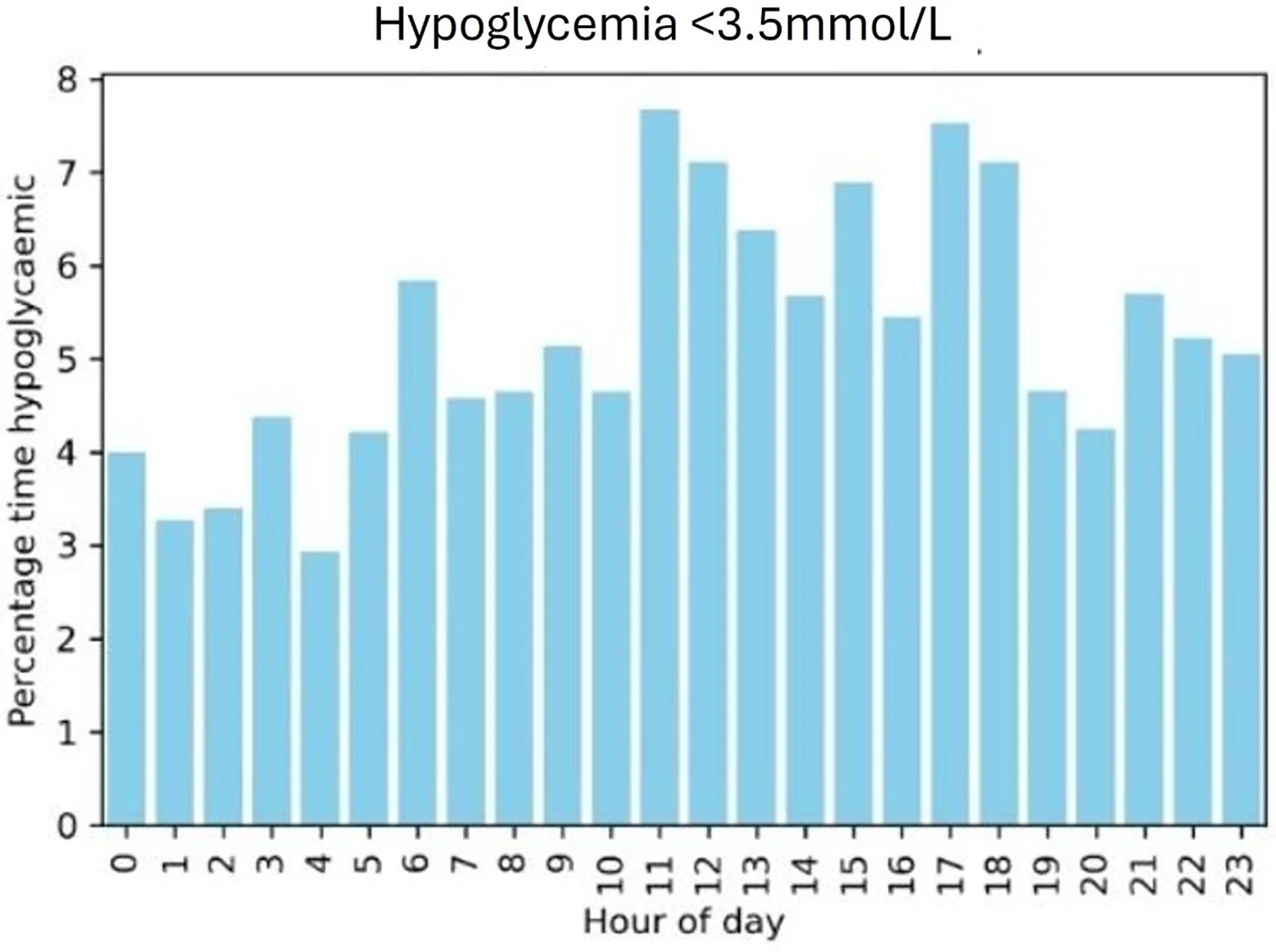
There were 134, 849 CGM data points available for analysis, representing 11, 237 hours of inpatient glucose monitoring. Mean (range) time below range (<3.5mmol/L) was 4.8% (1.8 - 14.5%). An analysis of hypoglycemia by time of day showed relatively low risk after midnight and before 6am and periods of highest risk in the afternoon (Figure 3).
After the pairing process, there were 3504 paired fingerprick and CGM values for analysis. Mean absolute relative difference (MARD) was 24.1% with CGM devices tending to overread; mean difference was +0.43mmol/L, with absolute difference 1.24mmol/L. Hypoglycemia (<3.5mmol/L) sensitivity was only 38.8% and hypoglycemia detection rate only 56.7%, with 236/416 fingerprick confirmed hypoglycemia events identified by CGM within 15 minutes of fingerprick.
When plotted on the Hypoglycemia Error Grid (HEG), 89.4% of values were within Zone A, representing no risk (Figure 4). There were 5.5% and 0.7% of values within Zones C and D, representing moderate and severe risk respectively (Figure 4).
3.3 Limitations
Several limitations must be recognized. This is a single-center study with a modest sample size—inevitable given the rarity of severe HI. Scheduled fingerprick intervals varied by clinical context, introducing heterogeneity into counterfactual modelling, although the method was applied consistently and reflects real-world practice. It is also possible that planned fingerprick frequency was reduced by the reassuring presence of CGM and this may be acting to falsely increase hypoglycemic time saved. Finally, CGM alarm settings, staff familiarity, and responsiveness to alerts likely influenced hypoglycemia prevention and may limit generalizability to centers less experienced with this technology.
4 Discussion
The present study provides the first systematic evaluation of CGM as a routine clinical tool for inpatients with HI. While CGM has been heavily adopted in diabetes care for two decades and has begun to demonstrate perioperative utility in HI (18), its role in the inpatient setting has not been well documented. Our findings show that CGM can materially alter the glycemic landscape of inpatient HI care, identifying hypoglycemia that would have been missed by routine fingerprick monitoring and likely preventing a substantial proportion of otherwise unrecognized events.
Across 627 patient-days of monitoring, CGM identified 915 candidate hypoglycemia events, of which 273 were confirmed biochemically. This represents a sizeable burden of hypoglycemia despite the intensive inpatient care provided at an international center of excellence. This aligns with outpatient findings from wider CGM datasets in HI showing high event frequency (16) and clustering at predictable times of day. Interestingly, clustering in the inpatient setting appears at a different time of day from that seen in multiple studies in the outpatient setting where hypoglycaemia is more commonly seen in the early hours of the morning (16, 17, 20). Further work is warranted, to try and understand this discrepancy. Unlike outpatient studies, however, our inpatient analysis attempts to quantify the counterfactual—that is, how much hypoglycemia would likely have occurred without CGM-triggered intervention. By examining scheduled fingerprick intervals and aligning them to CGM-detected events, we estimate that CGM saved an average of 20.5 minutes of hypoglycemia per patient-day, effectively halving the hypoglycemic burden.
This approach moves beyond previous accuracy studies and measures real-world clinical impact. Previous evaluations—including our own work on the Hypoglycemia Error Grid—have demonstrated that point accuracy and hypoglycemia sensitivity of CGM in HI are consistently suboptimal. The present data do not contradict this; indeed, our paired analysis confirms familiar patterns of over-reading and poor hypoglycemia sensitivity. Yet these limitations did not prevent CGM from having a meaningful protective effect for vulnerable patients. This reinforces a key principle of using CGM for those with HI: CGM provides greatest value when it is used as a trend-monitoring and behavior-modifying tool, rather than as a surrogate for plasma glucose monitoring via finger-prick.
While the proportion of finger-prick refuted CGM hypoglycemia events (448/721) is high, and reflects known accuracy limitations, the burden is lower in the inpatient setting. In the inpatient environment alarms served as alerts to risk, often prompting earlier bedside glucose checks, increased vigilance, or anticipatory adjustments in intravenous therapy. These alarms are often interpreted by medical professionals, and the often-high burden of alarm fatigue is not felt solely by caregivers. The clinical cost of false positives is therefore lower in this setting, whereas the potential benefit of preventing prolonged or severe hypoglycemia remains high.
Notwithstanding the documented limitations, this study provides the clearest evidence to date that CGM can reduce hypoglycemia exposure for children with HI during hospital admission. We suggest that CGM should be considered for all inpatients with severe HI, particularly those with unpredictable glycemic profiles or requiring high-frequency monitoring. Larger multicenter studies—ideally using standardized sampling protocols, are warranted to evaluate generalizability and to refine estimates of hypoglycemia prevention. This study utilised data from 13 inpatients all of whom had varying inpatient lengths. For example, Patient G contributed very few data points (4 finger-pricks recorded) due to their short inpatient stay. While they appear to be an outlier, we chose to leave this data in our study as the small number of data points would not unduly influence mean effects of the overall outcome of the study.
More broadly, CGM in HI must be understood as a tool for trend-driven decision support rather than numeric glucose replacement. As HI care increasingly incorporates digital phenotyping and algorithmic support, the role of CGM will expand beyond measurement to active risk management.
References
1 Banerjee I Salomon-Estebanez M Shah P Nicholson J Cosgrove KE Dunne MJ . Therapies and outcomes of congenital hyperinsulinism-induced hypoglycaemia . Diabetes Med . ( 2019 ) 36 : 9 – 21 . doi: 10.1111/dme.13823 30246418 PMC6585719
2 Roeper M Salimi Dafsari R Hoermann H Mayatepek E Kummer S Meissner T . Risk factors for adverse neurodevelopment in transient or persistent congenital hyperinsulinism . Front Endocrinol . ( 2020 ) 11 . doi: 10.3389/fendo.2020.580642 33424766 PMC7793856
3 Avatapalle BH Banerjee I Shah S Pryce M Nicholson J Rigby L . Abnormal neurodevelopmental outcomes are common in children with transient congenital hyperinsulinism . Front Endocrinol . ( 2013 ) 4 . doi: 10.3389/fendo.2013.00060 23730298 PMC3657691
4 Lord K Radcliffe J Gallagher PR Adzick NS Stanley CA De León DD . High risk of diabetes and neurobehavioral deficits in individuals with surgically treated hyperinsulinism . J Clin Endocrinol Metab . ( 2015 ) 100 : 4133–9 . doi: 10.1210/jc.2015-2539 26327482 PMC4702456
5 James C Kapoor RR Ismail D Hussain K . The genetic basis of congenital hyperinsulinism . J Med Genet . ( 2009 ) 46 : 289–99 . doi: 10.1136/jmg.2008.064337 19254908
6 Thornton PS Hawkes CP . Approach to the patient: Investigation of pediatric hypoglycemia in the emergency department—a practical algorithm . J Clin Endocrinol Metab . ( 2024 ) 109 : e1513–21 . doi: 10.1210/clinem/dgae072 38320208
7 Worth C Yau D Salomon Estebanez M O’Shea E Cosgrove K Dunne M . Complexities in the medical management of hypoglycaemia due to congenital hyperinsulinism . Clin Endocrinol . ( 2020 ) 92 : 387–95 . doi: 10.1111/cen.14152 31917867
8 Worth C Dunne M Ghosh A Harper S Banerjee I . Continuous glucose monitoring for hypoglycaemia in children: Perspectives in 2020 . Pediatr Diabetes . ( 2020 ) 21 : 697 – 706 . doi: 10.1111/pedi.13029 32315515
9 Worth C Hoskyns L Salomon-Estebanez M Nutter PW Harper S Derks TGJ . Continuous glucose monitoring for children with hypoglycaemia: Evidence in 2023 . Front Endocrinol . ( 2023 ) 14 . doi: 10.3389/fendo.2023.1116864 36755920 PMC9900115
10 Sivasubramanian M Avari P Gilbert C Doodson L Morgan K Oliver N . Accuracy and impact on quality of life of real-time continuous glucose monitoring in children with hyperinsulinaemic hypoglycaemia . Front Endocrinol . ( 2023 ) 14 . doi: 10.3389/fendo.2023.1265076 37822600 PMC10562688
11 Auckburally SH Worth C Salomon-Estebanez M Nicholson J Harper S Nutter PW . Families’ experiences of continuous glucose monitoring in the management of congenital hyperinsulinism: A thematic analysis . Front Endocrinol . ( 2022 ) 13 . doi: 10.3389/fendo.2022.894559 35928891 PMC9343578
12 Couch H Pearson A Malhotra N Ferguson M Couch G Gilbert C . Continuous glucose monitoring in the management of congenital hyperinsulinism: A national user-satisfaction survey, UK . J Clin Endocrinol Metab . ( 2025 ) 111 : 139–48 . doi: 10.1210/clinem/dgaf313 40418653 PMC12712966
13 Ng SM Dearman S Fisher M Mushtaq T Randell T . Case for funding of continuous glucose monitoring systems for patients with recurrent hypoglycaemia . Arch Dis Childhood . ( 2023 ) 108 : 816–7 . doi: 10.1136/archdischild-2022-323872 36202595
14 Worth C Nutter PW Salomon-Estebanez M Auckburally S Dunne MJ Banerjee I . The behaviour change behind a successful pilot of hypoglycaemia reduction with HYPO-CHEAT . DIGITAL Health . ( 2023 ) 9 : 20552076231192011 . doi: 10.1177/20552076231192011 37545627 PMC10403985
15 Worth C Nutter PW Dunne MJ Salomon-Estebanez M Banerjee I Harper S . HYPO-CHEAT’s aggregated weekly visualisations of risk reduce real world hypoglycaemia . DIGITAL Health . ( 2022 ) 8 : 20552076221129712 . doi: 10.1177/20552076221129712 36276186 PMC9580093
16 Worth C Tropeano Y Gokul PR Cosgrove KE Salomon-Estebanez M Senniappan S . Insight into hypoglycemia frequency in congenital hyperinsulinism: Evaluation of a large UK CGM dataset . BMJ Open Diabetes Res Care . ( 2022 ) 10 : e002849 . doi: 10.1136/bmjdrc-2022-002849 35675953 PMC9185472
17 Worth C Harper S Salomon-Estebanez M O’Shea E Nutter PW Dunne MJ . Clustering of hypoglycemia events in patients with hyperinsulinism: Extension of the digital phenotype through retrospective data analysis . J Med Internet Res . ( 2021 ) 23 : e26957 . doi: 10.2196/26957 34435596 PMC8590184
18 Worthington S Worth C Auckburally SH Bowler M Beauve B O’Shea E . Utility of continuous glucose monitoring during pancreatic surgery in patients with congenital hyperinsulinism . Front Endocrinol . ( 2026 ) 17 . doi: 10.3389/fendo.2026.1788026 41890189 PMC13012931
19 Worth C Dunne MJ Salomon-Estebanez M Harper S Nutter PW Dastamani A . The hypoglycaemia error grid: A UK-wide consensus on CGM accuracy assessment in hyperinsulinism . Front Endocrinol . ( 2022 ) 13 . doi: 10.3389/fendo.2022.1016072 36407313 PMC9666389
20 Worth C Auckburally S Worthington S Ahmad S O’Shea E Senniappan S . Continuous glucose monitoring–derived glycemic phenotyping of childhood hypoglycemia due to hyperinsulinism: A year-long prospective nationwide observational study . J Diabetes Sci Technol . ( 2025 ) 19 : 1528–37 . doi: 10.1177/19322968241255842 39564699 PMC11577547
Sources
- Inpatient continuous glucose monitoring halves the risk of hypoglycemia in patients with hyperinsulinism · DOI: 10.3389/fendo.2026.1943475Published: Copyright © 2026 Chandra, De Silva, Worthington, Banerjee and Worth. Chloe Chandra; Shamani De Silva; Sarah Worthington; Indraneel Banerjee; Chris Worth. Inpatient continuous glucose monitoring halves the risk of hypoglycemia in patients with hyperinsulinism. Frontiers in Endocrinology. 2026;17:1943475. Published 2026-10-15. DOI: 10.3389/fendo.2026.1943475.CC BY 4.0 · Полный перевод основного содержания на русский язык. Служебные разделы опущены, оригинал сохранён отдельно. / Full Russian translation of the main article, editorial title, administrative sections omitted. В аннотации чувствительностью названы 56,7%. В результатах чувствительность при парном сравнении составляет 38,8%, а 56,7% — доля эпизодов, обнаруженных в окне ±15 минут. Авторы также сообщают о 194 исключённых и отдельно о 146 неподтверждённых эпизодах без измерения крови. Расчётное сокращение времени основано на интервале до следующего запланированного прокола, без контрольной группы. The abstract labels 56.7% as sensitivity. The results distinguish paired sensitivity (38.8%) from detection within ±15 minutes (56.7%). The authors separately report 194 excluded and 146 unconfirmed events without capillary checks. Estimated time saved uses the next scheduled test as a counterfactual, without a control group. The studies involving humans were approved by University of Manchester, UK Health Research Authority. The studies were conducted in accordance with the local legislation and institutional requirements. Written informed consent for participation in this study was provided by the participants’ legal guardians/next of kin. The author(s) declared that this work was conducted in the absence of any commercial or financial relationships that could be construed as a potential conflict of interest. The author IB declared that they were an editorial board member of Frontiers, at the time of submission. This had no impact on the peer review process and the final decision. The author(s) declared that financial support was not received for this work and/or its publication. Автор IB входил в редколлегию Frontiers. По заявлению авторов, это не повлияло на рецензирование и решение о публикации. Получение финансовой поддержки и иные коммерческие или финансовые конфликты не заявлены.