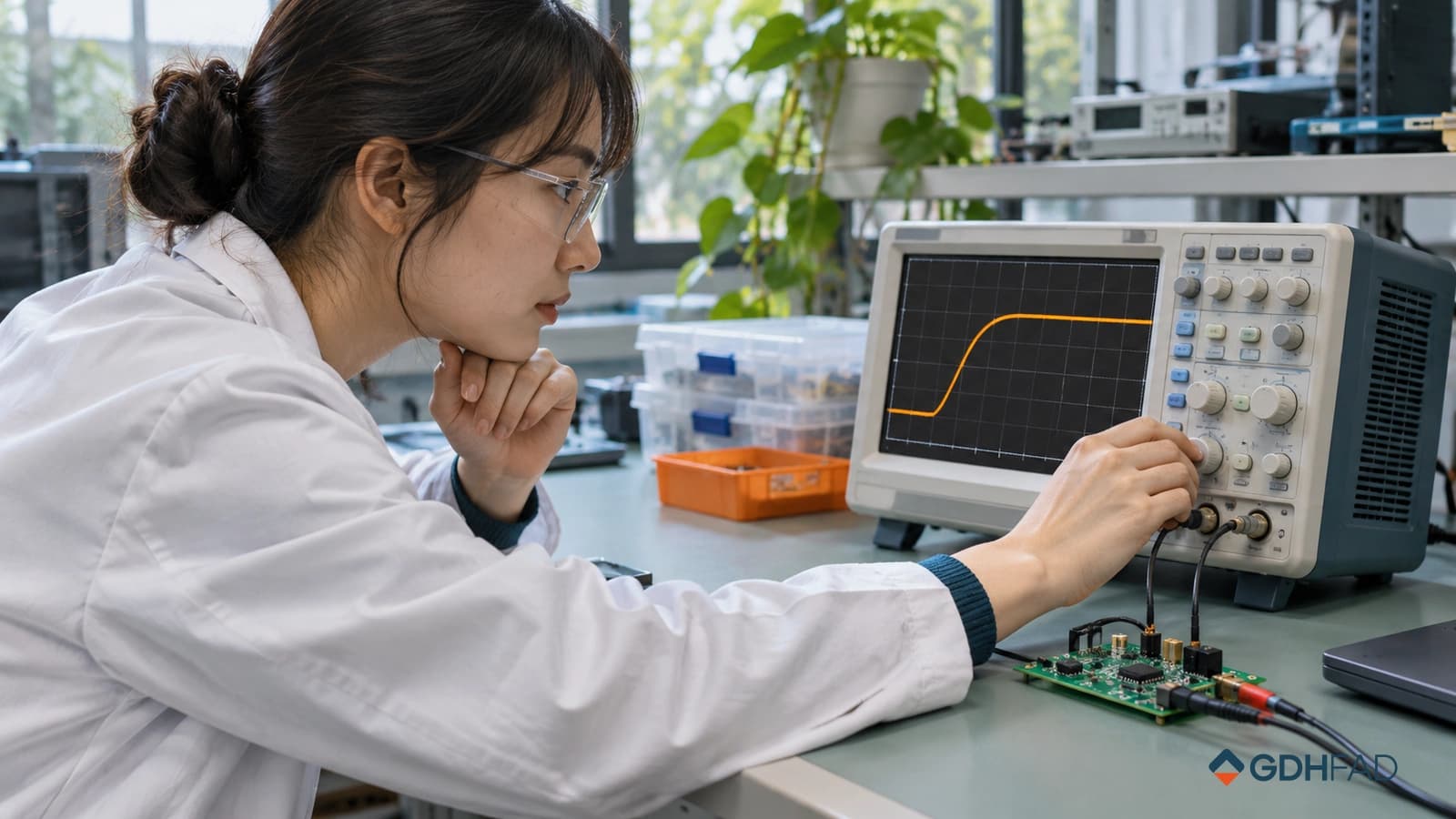
The display shows processed information
An electrochemical meter does not simply “see sugar”. The sensor creates an electrical response related to the reaction. Electronics register it and software calculates a result using system-specific parameters.
Defined measurement conditions
The sequence, timing and electrical conditions depend on the reagent, electrodes and filling behaviour. Strip, electronics and software all matter. Changing one element requires assessing the others.
Calculation needs evidence
The signal-concentration relationship is established and verified during development. The device must perform within its claimed conditions, not only with a convenient laboratory sample. Sample, environmental and supply variation require evaluation. One demonstration is not validation.
Readiness and error messages
Messages guide the correct sequence. Do not replace an error or out-of-range message with an invented number. User instructions and development requirements both include these behaviours.
A technical project perspective
Agree responsibilities for strips, electronics and software. Assess material or production changes together with the algorithm. This is a general explanation; it does not disclose or invent GDHFAD’s calculation parameters.
Sources
- Hassan M. H. et al. (2021). Recent Advances in Enzymatic and Non-Enzymatic Electrochemical Glucose Sensing · DOI: 10.3390/s21144672Published:
- FDA: Self-Monitoring Blood Glucose Test Systems for OTC UsePublished: