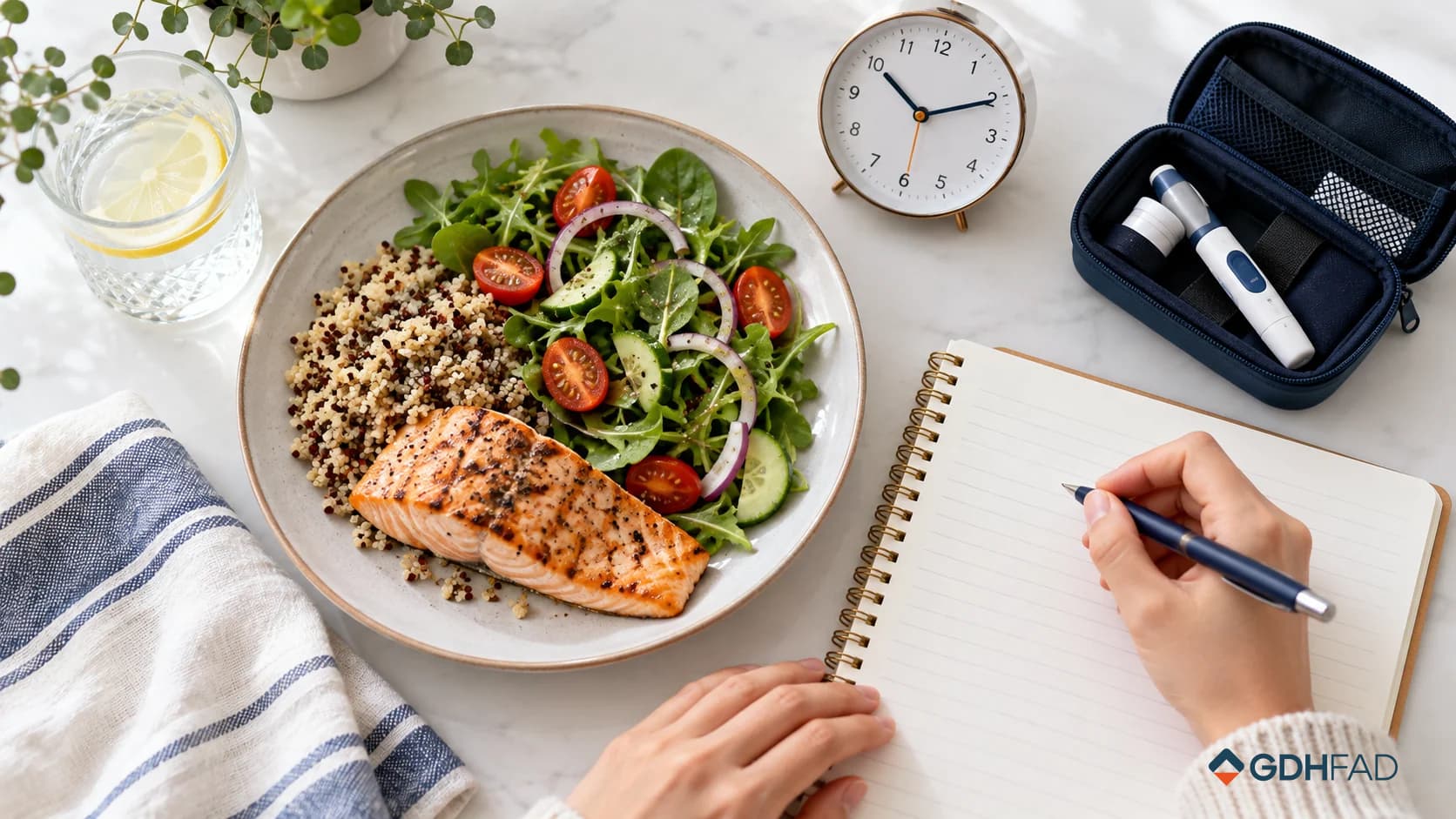
Timing gives a result meaning
Glucose changes during the day. Before- and after-meal tests answer different questions. “This morning” may not be enough context. Record meal timing in the way agreed with your clinician and use a consistent starting point.
Do not prescribe your own experiment
Whether and when to test after meals depends on your care plan. Avoid testing every food repeatedly without a reason agreed with your clinician. The result reflects more than food: starting glucose, medicines, activity and illness can contribute.
Keep notes manageable
A brief record is more sustainable than a detailed daily report. Include what matters for your agreed plan.
- Meal time and test time.
- Value with units.
- A brief meal note if requested.
- Unusual activity, illness or symptoms.
Discuss patterns
Do not remove whole food groups or alter medication because of one reading. Show repeated observations and context to your clinician or dietitian. Check the meter clock if timestamps are confusing. Monitoring should be informative rather than a constant judgement of every meal.
Sources
- CDC: Monitoring Your Blood SugarPublished:
- NIDDK: Managing DiabetesReviewed by the source: