Numbers need context
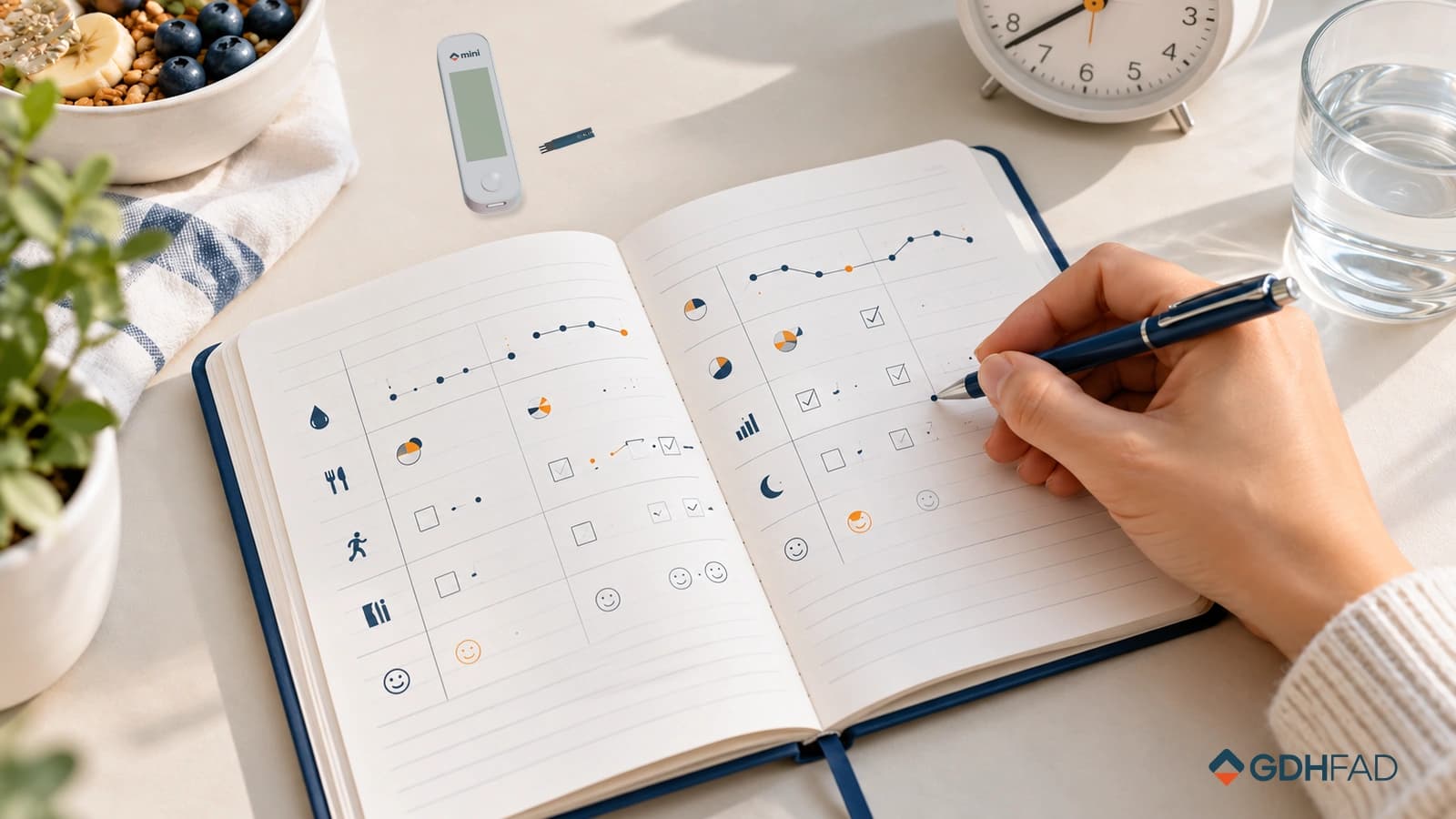
Records are more useful when the reason and timing of each test are clear. Before-food readings, after-food readings and illness days are not interchangeable. A diary prevents having to reconstruct circumstances from memory a week later.
The essentials
Record date, time, value and units, with brief notes on food and unusual circumstances. If recording medication, note what was actually taken as prescribed; do not use the diary to independently change doses.
- Date and time.
- Result and units.
- Relation to meals.
- Activity, illness or symptoms.
- A question for your clinician.
Paper or an app
Choose a format you can use consistently. Meter memory helps but may not capture context. Check units and timestamps when transferring data. Do not alter or delete inconvenient readings to make a graph look better.
Before an appointment
Flag repeated situations rather than diagnosing yourself from fluctuations. Examples include weakness after walks or uncertainty about applying the sample. Bring the meter and records. Keep technical error codes and lot information separately from ordinary blood results.
Sources
- NIDDK: Managing DiabetesReviewed by the source:
- CDC: Monitoring Your Blood SugarPublished: