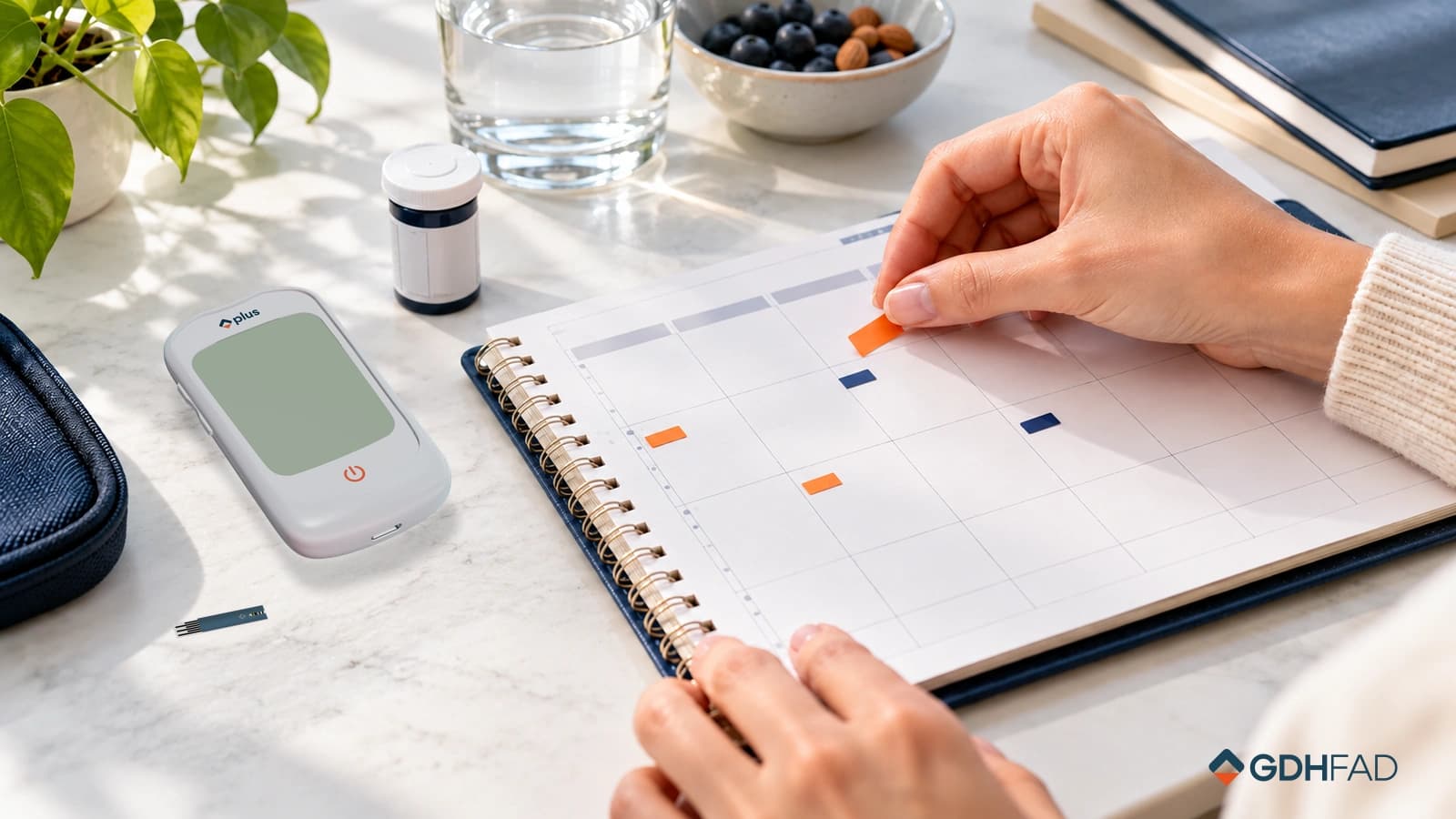
A test answers a question
Monitoring shows glucose at a particular moment and helps relate it to food, activity or symptoms. A series of records lets your clinician look for patterns. A reading without timing and context is less informative than a planned set of measurements.
There is no universal schedule
Frequency depends on diabetes type, treatment, low-glucose risk and circumstances. Illness, treatment changes or activity may alter the plan. A fixed number of daily tests cannot substitute for individual advice.
Agree on a plan
Ask about both timing and actions after results. Write the plan down and keep it with your supplies.
- When are routine checks needed?
- When should I check additionally?
- What are my personal goals and warning situations?
- When should I seek help and share my records?
Make records useful
Include date, time, value, units and relevant context. Home monitoring does not replace prescribed laboratory tests. Discuss anxiety or supply costs with your clinician rather than changing monitoring frequency on your own.
Measurements and how you feel
Do not rely only on how you feel. Measurements recorded alongside notes about symptoms help you discuss what is happening with your doctor.
Sources
- CDC: Monitoring Your Blood SugarPublished:
- NIDDK: Managing DiabetesReviewed by the source: